



|
| 产地 | 进口、国产 |
| 品牌 | 上海莼试 |
| 保存条件 | Store at -20 °C |
| 货号 | CS10678 |
| 应用范围 | WB=1:100-500 ELISA=1:500-1000 IP=1:20-100 IHC-P=1:100-500 IHC-F=1:100-500 IF=1:100-500 |
| CAS编号 | |
| 抗体名 | Anti-PTEN/MMAC1(NT) |
| 克隆性 | |
| 靶点 | 详见说明书 |
| 适应物种 | 详见说明书 |
| 形态 | 详见说明书 |
| 宿主 | 详见说明书 |
| 亚型 | IgG |
| 标识物 | 详见说明书 |
| 浓度 | 1mg/1ml% |
| 免疫原 | KLH conjugated synthetic peptide derived from human PTEN |
产品订购信息:
英文名称 Anti-PTEN/MMAC1(NT)
中文名称 一种抑制基因抗体(N端)规格
别 名 ITGA 2; MGC11227; MHAM; MMAC 1; MMAC1; Bannayan Zonana; BZS a; Multiple hamartoma (Cowden syndrome); Mutated in Mutiple Advanced Cancers 1; Phosphatase and Tensin Homolog; Phosphatidylinositol 345 trisphosphate 3 phosphatase and dual specificity protein phosphatase PTEN; Phosphatidylinositol 345 trisphosphate 3 phosphatase; Platelet antigen BR; PTEN 1; PTEN1; Tensin homolog; TEP 1; TEP1; VLA 2 Receptor Alpha Subunit.

浓 度 1mg/1ml
规 格 0.1ml/100μg 0.2ml/200μg
抗体来源 Rabbit
克隆类型 polyclonal
交叉反应 Human, Mouse, Rat
产品类型 一抗
研究领域 细胞生物 细胞周期蛋白 激酶和磷酸酶 表观遗传学
蛋白分子量 predicted molecular weight: 44kDa
性 状 Lyophilized or Liquid
免 疫 原 KLH conjugated synthetic peptide derived from human PTEN
亚 型 IgG
纯化方法 affinity purified by Protein A
储 存 液 0.01M PBS, pH 7.4 with 10 mg/ml BSA and 0.1% Sodium azide
一种抑制基因抗体(N端)规格 产品应用 WB=1:100-500 ELISA=1:500-1000 IP=1:20-100 IHC-P=1:100-500 IHC-F=1:100-500 IF=1:100-500
(石蜡切片需做抗原修复)
not yet tested in other applications.
optimal dilutions/concentrations should be determined by the end user.
保存条件 Store at -20 °C for one year. Avoid repeated freeze/thaw cycles. The lyophilized antibody is stable at room temperature for at least one month and for greater than a year when kept at -20°C. When reconstituted in sterile pH 7.4 0.01M PBS or diluent of antibody the antibody is stable for at least two weeks at 2-4 °C.
Important Note This product as supplied is intended for research use only, not for use in human, therapeutic or diagnostic applications.
产品介绍 Potential tumor suppressor. Acts as a phosphoinositide3-phosphatase by regulating PtdIns (3,4,5)P3 levels. Involved in regulation of the AKT1 signaling pathway. The unphosphorylated form cooperates with AIP1 to suppress AKT1 activation.The PTEN/MMAC1 discovers the first to have the suppress of the phosphoric acid enzyme activity cancer gene currently.The gene of PTEN locates the chromosome10q23 area, sending forth sex tumor and a few households cancers with the variety to suffer from the comprehensive disease easilyrelevant.The activity that passes to repress the Akt regulates the cell period, the cell ground rule decease and glues to connect.This text discussed PTEN structure, function and its correlationses, the PTEN is in tumor repress function mechanism.
Function : Tumor suppressor. Acts as a dual-specificity protein phosphatase, dephosphorylating tyrosine-, serine- and threonine-phosphorylated proteins. Also acts as a lipid phosphatase, removing the phosphate in the D3 position of the inositol ring from phosphatidylinositol 3,4,5-trisphosphate, phosphatidylinositol 3,4-diphosphate, phosphatidylinositol 3-phosphate and inositol 1,3,4,5-tetrakisphosphate with order of substrate preference in vitro PtdIns(3,4,5)P3 > PtdIns(3,4)P2 > PtdIns3P > Ins(1,3,4,5)P4. The lipid phosphatase activity is critical for its tumor suppressor function. Antagonizes the PI3K-AKT/PKB signaling pathway by dephosphorylating phosphoinositides and thereby modulating cell cycle progression and cell survival. The unphosphorylated form cooperates with AIP1 to suppress AKT1 activation. Dephosphorylates tyrosine-phosphorylated focal adhesion kinase and inhibits cell migration and integrin-mediated cell spreading and focal adhesion formation. Plays a role as a key modulator of the AKT-mTOR signaling pathway controlling the tempo of the process of newborn neurons integration during adult neurogenesis, including correct neuron positioning, dendritic development and synapse formation. May be a negative regulator of insulin signaling and glucose metabolism in adipose tissue. The nuclear monoubiquitinated form possesses greater apoptotic potential, whereas the cytoplasmic nonubiquitinated form induces less tumor suppressive ability.
Subunit : Monomer. The unphosphorylated form interacts with the second PDZ domain of AIP1 and with DLG1 and MAST2 in vitro. Interacts with MAGI2, MAGI3, MAST1 and MAST3, but neither with MAST4 nor with DLG5. Interaction with MAGI2 increases protein stability. Interacts with NEDD4. Interacts with NDFIP1 and NDFIP2; in the presence of NEDD4 or ITCH, this interaction promotes PTEN ubiquitination. Interacts (via C2 domain) with FRK. Interacts with USP7; the interaction is direct. Interacts with ROCK1. Interacts with XIAP/BIRC4.
Subcellular Location : Cytoplasm. Nucleus. Nucleus, PML body. Note=Monoubiquitinated form is nuclear. Nonubiquitinated form is cytoplasmic. Colocalized with PML and USP7 in PML nuclear bodies. XIAP/BIRC4 promotes its nuclear localization.
Post-translational modifications : Constitutively phosphorylated by CK2 under normal conditions. Phosphorylated in vitro by MAST1, MAST2 and MAST3. Phosphorylation results in an inhibited activity towards PIP3. Phosphorylation can both inhibit or promote PDZ-binding. Phosphorylation at Tyr-336 by FRK/PTK5 protects this protein from ubiquitin-mediated degradation probably by inhibiting its binding to NEDD4. Phosphorylation by ROCK1 is essential for its stability and activity. Phosphorylation by PLK3 promotes its stability and prevents its degradation by the proteasome.
Monoubiquitinated; monoubiquitination is increased in presence of retinoic acid. Deubiquitinated by USP7; leading to its nuclear exclusion. Monoubiquitination of one of either Lys-13 and Lys-289 amino acid is sufficient to modulate PTEN compartmentalization. Ubiquitinated by XIAP/BIRC4.
DISEASE : Defects in PTEN are a cause of Cowden disease (CD) [MIM:158350]; also known as Cowden syndrome (CS). CD is an autosomal dominant cancer predisposition syndrome associated with elevated risk for tumors of the breast, thyroid and skin. The predominant phenotype for CD is multiple hamartoma syndrome, in many organ systems including the breast (70% of CD patients), thyroid (40-60%), skin, CNS (40%), gastrointestinal tract. Affected individuals are at an increased risk of both breast and thyroid cancers. Trichilemmomas (benign tumors of the hair follicle infundibulum), and mucocutaneous papillomatosis (99%) are hallmarks of CD.
Defects in PTEN are the cause of Lhermitte-Duclos disease (LDD) [MIM:158350]; also known as cerebelloparenchymal disorder VI. LDD is characterized by dysplastic gangliocytoma of the cerebellum which often results in cerebellar signs and seizures. LDD and CD seem to be the same entity, and are considered as hamartoma-neoplasia syndromes.
Defects in PTEN are a cause of Bannayan-Zonana syndrome (BZS) [MIM:153480]; also known as Ruvalcaba-Myhre-Smith syndrome (RMSS) or Bannayan-Riley-Ruvalcaba syndrome (BRRS). In BZS there seems not to be an increased risk of malignancy. It has a partial clinical overlap with CD. BZS is characterized by the classic triad of macrocephaly, lipomatosis and pigmented macules of the gland penis.
Defects in PTEN are a cause of head and neck squamous cell carcinomas (HNSCC) [MIM:275355]; also known as squamous cell carcinoma of the head and neck.
Defects in PTEN are a cause of susceptibility to endometrial cancer (ENDMC) [MIM:608089].
Note=PTEN mutations are found in a subset of patients with Proteus syndrome, a genetically heterogeneous condition. The molecular diagnosis of PTEN mutation positive cases classifies Proteus syndrome patients as part of the PTEN hamartoma syndrome spectrum. As such, patients surviving the early years of Proteus syndrome are likely at a greater risk of developing malignancies.
Defects in PTEN are a cause of susceptibility to glioma type 2 (GLM2) [MIM:613028]. Gliomas are central nervous system neoplasms derived from glial cells and comprise astrocytomas, glioblastoma multiforme, oligodendrogliomas, and ependymomas.
[DISEASE] Defects in PTEN are a cause of VACTERL association with hydrocephalus (VACTERL-H) [MIM:276950]. VACTERL is an acronym for vertebral anomalies, anal atresia, congenital cardiac disease, tracheoesophageal fistula, renal anomalies, radial dysplasia, and other limb defects.
Defects in PTEN may be a cause of susceptibility to prostate cancer (PC) [MIM:176807]. It is a malignancy originating in tissues of the prostate. Most prostate cancers are adenocarcinomas that develop in the acini of the prostatic ducts. Other rare histopathologic types of prostate cancer that occur in approximately 5% of patients include small cell carcinoma, mucinous carcinoma, prostatic ductal carcinoma, transitional cell carcinoma, squamous cell carcinoma, basal cell carcinoma, adenoid cystic carcinoma (basaloid), signet-ring cell carcinoma and neuroendocrine carcinoma.
Defects in PTEN are a cause of macrocephaly/autism syndrome (MCEPHAS) [MIM:605309]. Patients have autism spectrum disorders and macrocephaly, with head circumferences ranging from +2.5 to +8 SD for age and sex (average head circumference +4.0 SD).
Note=A microdeletion of chromosome 10q23 involving BMPR1A and PTEN is a cause of chromosome 10q23 deletion syndrome, which shows overlapping features of the following three disorders: Bannayan-Zonana syndrome, Cowden disease and juvenile polyposis syndrome.
Similarity : Contains 1 C2 tensin-type domain.
Contains 1 phosphatase tensin-type domain.
Database links : UniProtKB/Swiss-Prot: P60484.1
PTEN是一种抑制基因(N端抗体),在维持细胞的增殖、分化和凋亡平衡起重要作用,该基因在许多常表现为突变或杂合性丢失,NMAC1主要用于、乳腺、、非何杰金氏各种的研究.

Anti-CD158b2/KIR2DL3/NKAT2a/FITC 荧光素标记NK细胞抑制性受体2DL3抗体IgGMulti-class antibodies规格: 0.2ml
Anti-IL-3R Alpha/CD123/FITC 荧光素标记白介素3受体a链抗体IgGMulti-class antibodies规格: 0.2ml
Rhesus antibody Rh CD33/Siglec-3 CD33抗体 规格 0.1ml
N-cadherin N-钙粘附分子抗原 0.5mg
Id1 英文名称: DNA结合抑制因子1抗体 0.2ml
Rhesus antibody Rh SULT1A1 芳基磺基转移酶1抗体 规格 0.2ml
Anti-IL-3R Alpha/CD123/FITC 荧光素标记白介素3受体a链抗体IgGMulti-class antibodies规格: 0.2ml
human Mus musculus similar to 60S ribosomal protein L12,LOC382344 ELISA kit 人类似60S核糖体蛋白L21Multi-class antibodies规格: 48T
Anti-Phospho-SHIP2 (Tyr986/987) 磷酸化蛋白酪氨酸磷酸酶2抗体Multi-class antibodies规格: 0.1ml
Rhesus antibody Rh Goat Anti-rat IgG/PE-Cy3 PE-Cy3标记的羊抗大鼠IgG 规格 0.1ml
Alpha-Fodrin IgG/IgA ELISA Kit 大鼠抗α-胞衬蛋白抗体IgG/IgA 96T
NFIC 英文名称: 核因子1C型抗体 0.2ml
BCNP 英文名称: B淋巴细胞新型蛋白1抗体 0.2ml
Anti-Phospho-SHIP2 (Tyr986/987) 磷酸化蛋白酪氨酸磷酸酶2抗体Multi-class antibodies规格: 0.1ml
PAPP-A(Human pregnancy associated plasma protein A) ELISA Kit 人相关血浆蛋白AMulti-class antibodies规格: 48T
Anti-Phospho-PKR (Thr446) 磷酸化蛋白激酶R抗体Multi-class antibodies规格: 0.1ml
Rhesus antibody Rh HEATR3 HEATR3蛋白抗体 规格 0.2ml
SHBG ELISA Kit 大鼠性激素结合球蛋白 96T
phospho-P53(Ser315) 英文名称: 磷酸化抑制基因P53抗体 0.1ml
Cytohesin 2 英文名称: 胞粘蛋白2抗体 0.2ml
Anti-Phospho-PKR (Thr446) 磷酸化蛋白激酶R抗体Multi-class antibodies规格: 0.1ml
CL-0168Neuro-2a/N2a(小鼠脑神经瘤细胞)5×106cells/瓶×2
GSK3B Others Human 人 GSK3B 杆状病毒-昆虫细胞裂解液 (阳性对照)
人视网膜色素上皮细胞裂解物HRPEpiCL
NCI-H1755[H1755]细胞,人细胞 人胚,HELF细胞 卵巢上皮细胞Many types of cells包装:5 × 10⁵次方(1ml)
兔主动脉平滑肌细胞;SMC
TIMP2 Others Human 人 TIMP2 / TIMP-2 人细胞裂解液 (阳性对照)
CL-0167NCI-H292(人细胞)5×10⁶cells/瓶×2
CD8B Others Human 人 CD8B / P37 / LEU2 人细胞裂解液 (阳性对照)
小鼠肠内皮细胞完全培养基 100mL
marc-145猴胚胎肾上皮细胞 Marc-145 monkey embryonic kidney epithelial cells DMEM+10% FBS
LIF Protein Human 重组人 LIF 蛋白 (Fc 标签)
RK1(大鼠肾细胞) 5×10⁶cells/瓶×2 786-0(肾透明细胞腺癌)
一种抑制基因抗体(N端)规格 KLK6 Others Human 人 KLK6 / Kallikrein 6 / Neurosin 人细胞裂解液 (阳性对照)
人脑微内皮细胞
大鼠视网膜色素上皮细胞完全培养基 100mL
Tca-8113人舌鳞癌细胞 Tca-8113 human tongue squamous cell carcinoma 1640+10% FBS
IL11RA Protein Canine 重组狗 IL11RA / IL-11RA / IL11Rα 蛋白 (His 标签)
NCI-H2452(人间皮瘤细胞) 5×10⁶cells/瓶×2 L1210(细胞)

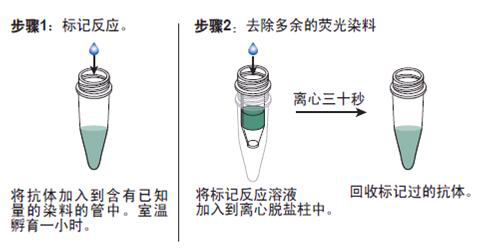
抗体的生物素化标记实验要点:
1. 一种抑制基因抗体(N端)规格 如在反应混合液中有叠氮钠或游离氨基存在,会抑制标记反应。因此,蛋白质在反应前要对 0.1mol/L碳酸氢钠缓冲液或0.5mol/L硼酸缓冲液充分透析;
2.所用的NHSB及待生物素化蛋白质之间的分子比按蛋白质表面的ε-氨基的密度会有所不同,选择不当则影响标记的效率,应先用几个不同的分子比来筛选最适条件;
3.用NHSB量过量也是不利的,抗原的结合位点可能因此被封闭,导致抗体失活;
4.由于抗体的氨基不易接近可能造成生物素化不足,此时可加入去污剂如 Triton x-100, Tween20等;
5.当游离ε-氨基(赖氨酸残基的氨基)存在于抗体的抗原结合位点时,或位于酶的催化位点时,生物素化会降低或损伤抗体蛋白的结合力或活性;
6.生物素还可能与不同的功能基团,如羰基、氨基、巯基、异咪唑基及*基,也可与糖基共价结合;
7.交联反应后,应充分透析,否则,残余的生物素会对生物素化抗体与亲和素的结合产生竞争作用;
8.在细胞的荧光标记实验中,中和亲和素的本底低,但由于链霉亲和素含有少量正电荷,故对某些细胞可导致高本底。
抗体的鉴定:
1)一种抑制基因抗体(N端)规格 抗体的效价鉴定:不管是用于诊断还是用于,制备抗体的目的都是要求较高效价。不同的抗原制备的抗体,要求的效价不一。鉴定效价的方法很多,包括有试管凝集反应,琼脂扩散试验,酶联免疫吸附试验等。常用的抗原所制备的抗体一般都有约成的鉴定效价的方法,以资比较。如制备抗抗体的效价,一般就采用琼脂扩散试验来鉴定。
2)抗体的特异性鉴定:抗体的特异性是指与相应抗原或近似抗原物质的识别能力。抗体的特异性高,它的识别能力就强。衡量特异性通常以交叉反应率来表示。交叉反应率可用竞争抑制试验测定。以不同浓度抗原和近似抗原分别做竞争抑制曲线,计算各自的结合率,求出各自在IC50时的浓度,并按公式计算交叉反应率。
如果所用抗原浓度IC50浓度为pg/管,而一些近似抗原物质的IC50浓度几乎是无穷大时,表示这一抗血清与其他抗原物质的交叉反应率近似为0,即该血清的特异性较好。
3)抗体亲和力:是指抗体和抗原结合的牢固程度。亲和力的高低是由抗原分子的大小,抗体分子的结合位点与抗原决定簇之间立体构型的合适度决定的。有助于维持抗原抗体复合物稳定的分子间力有氢键,疏水键,侧链相反电荷基因的库仑力,范德华力和空间斥力。亲和力常以亲和常数K表示,K的单位是L/mol。抗体亲和力的测定对抗体的筛选,确定抗体的用途,验证抗体的均一性等均有重要意义。